
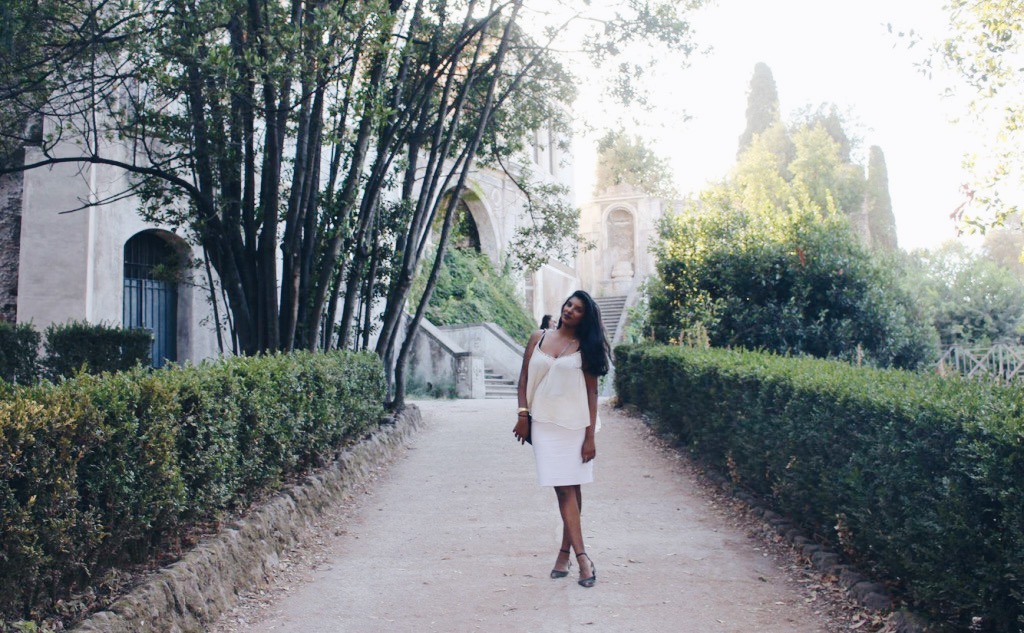
After a long bus ride from Siena to Rome, my friends and I were eager to get a taste of what the capital of Italy had to offer. We decided that the first thing on our list after lunch was the Colosseum. So, at lunch we made our game plan. We were going to be on the lookout for examples of leadership in Rome. We re-read our Professor’s journal post, looking for a reminder as to what was expected of us. This time around, stakes were higher, and we were eager to produce beyond exceptional results.
Upon arrival to the Colosseum we were in awe, taking in the architecture and the magnitude of the building. There must be a reason why thousands of tourists visited it daily, I thought to myself. To think that this structure was built in a time where technology was not as advanced is major. The amount of planning, coordination and smooth execution that was probably required at the time to build the Colosseum is striking. Bingo. Leadership definitely had a role to play with this site in Rome.
Set on finding out more, we each decide to volunteer 25 euros on what included a guided tour of the Colosseum and of the nearby Palatine Hills. In my opinion the tour was phenomenally executed, making it completely worth the money.
My favourite leg of the tour was the second, where an American expat led us through the Palatine Hills and gave us a detailed run down of how Rome came to be. He spoke of the famous story between Romulus and Remus and how it helped shape Rome into the major city that it is today. If there is one thing I took away from the tour, it was that Romulus made for a phenomenal leader. He was able to persuade his people that his choices and opinions were all for their benefit, and not for his. He gave to the Romans things such as architecture, literature, and different works of art, all in exchange to rule them. Romulus was a people oriented leader. He put his people first by making sure that he did not impose on them, or rather, he made his people think that he wasn’t imposing or forcing them. When it came to building the extravagant 14-acre palace on the Palatine Hills and the Ara Pacis Augustae (Alter of Augustan Peace), he wanted the people to think that they built it for themselves and not for him. He was such a skilled leader that he was able to make people think that he was what they wanted and needed.
Now that I am looking back in hindsight at what I have learned about in the course, in many ways, I find Romulus’ leadership style to be similar to that of the Mafia’s when it concerns the use of manipulative tactics. Like Romulus, the Mafia imposed control on their people by promising them protection in exchange for pizzo (protection money). The people of Sicily (and more specifically Palermo and Corleone, where we visited) felt a sense of safety and peace of mind knowing that they were out of harms way because they had already contributed their part. Once the people of Romulus were under his control, he was able to achieve tasks and get his vision for the city running, resulting in the grand spectacle of a city that Rome is today. In a way, Romulus used the people oriented style of leadership to achieve the results that a task oriented leader would want for their team. These are the functions and qualities that make up what a good leader performs.
As explained, they influence their followers to achieve a shared goal. They embody this role by motivating, rewarding, evaluating performance, and influencing. According to the reading titled “Discovering Your Authentic Leadership,” leaders who are authentic are the best. Romulus was authentic because he was able to completely change the leadership structure in Rome. When Rome was previously a republic and there were two presidents, he killed Remus and showed the people of Rome that he was destined to be the sole leader to lead over them. He rewarded his people by giving them architecture, literature, and works of art. He also was authentic by using symbolism in the Ara Pacis that he built. He used the finest carving of white marble the Romans had seen and, supposedly, it was to symbolize the reinventing of himself as a peaceful leader. His tactics, whether sincere or not, were successful and until today we reap the benefits of it!
Thankful,
Lubna
 Lubna Alli
Leave a comment