
Attending The Bata Shoe Company headquarters in Zlín, Czech Republic, which was founded in 1894 by Tomáš Baťa, provided valuable insight as to the reason for its success. Bata flourished during its privatization days before it’s nationalization in 1945 when the Czech government retook the business. Even post-nationalization the company still enjoys success today. Their business strategy pioneered that of future successful businesses, where their overall social philosophy was the driving force for their success. This success was brought to them as a result of their value for research and development (R&D), unrivalled corporate social responsibility (CSR), and strong vertical integration of business.

Highlighted in the tour of the Bata Shoe Company’s Zlín headquarters was their heavily placed emphasis on research and development, which was the key to their innovative modern designs and their excellence in manufacturing. At the time of their launch into the market during the early 1900s, despite the fact that there were other shoemakers in the market, the Bata Shoe Company proved to be innovative as they offered a segment of one mass customization at the consumer level. Shoes that they made came in many different designs, sizes, styles, colours and material choices. An example that was highlighted in the tour was the custom shoes that were made for Shaquille O’Neal’s oversized basketball sneakers, Elton John’s silver platform boots and Elvis Presley’s blue suede shoes. The company also provided excellence in manufacturing, as Bata was known to be synonymous with quality. To ensure a superior product, Bata manufactured predominantly in its own manufacturing facilities, which was demonstrated in the machine line. They had their own footwear production starting in 1984 and added other areas of work to increase innovation over the years. A few notable to the excellence in manufacturing were the precision engineering in 1903, the tannery in 1915 and the shoe-repair shops in 1923. The addition of shoe repair shops, in particular, adds to the company’s excellence in manufacturing as it guarantees the customer durable and long lasting shoes guaranteed at the expense of Bata. To keep up with strong worldwide demand, Bata operated an astounding 27 production facilities across 20 countries. As a result of Bata’s commitment to excellence, most of the company’s production facilities were awarded ISO 9000 certifications, while the others were in the certification process.
Second, The Bata Shoe Company set the pace for other companies with their unrivalled 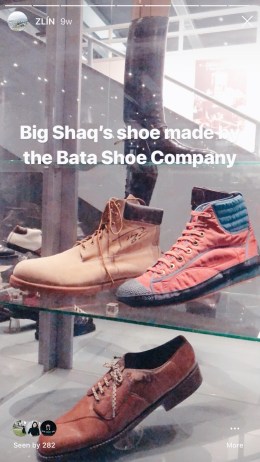 corporate social responsibility (CSR), where Bata believed firmly in environmental sustainability, employee wellness, and overall economic development. CSR is defined as a business approach that contributes to sustainable development by delivering economic, social and environmental benefits for all stakeholders. Concerning an awareness for the environment, Bata had (and still has) a sustainability approach integrated into its strategy, which includes the use of materials that are environmentally friendly, as well as the providing of aid and funding to other lesser developed areas in need through the Bata Relief Fund. Tomáš Baťa also pushed for sustainability in his time as the Mayor of Zlín, where one of his three goals included making Zlín a greener city. This became a model for the factory towns that were established around the world and showed his value for employee health and wellbeing. He promoted employee development by providing extensive management training courses for specialized technical skills. Bata also had special education facilities such as the shoemaking apprentice school (known as Bat’a School of Work) and a postsecondary institution in Zlín, which was stopped due to the Second World War. This sophisticated management training provided further development and growth opportunities for employees, as they were able to take on leadership roles in the global market when Bata needed off-site managers for new locations across the world. He started first in 1919 with the United States, as his primary market of entry, Additionally, those working for Bata were provided with the incentives of much higher wages than those offered by other companies at the time. Subsidized housing costs and profit sharing were also an incentive that was offered and that was an especially early idea for the time. Furthermore, Bata believed in economic development, which was pushed by the idea of improving the social and cultural lives of people in the area. He was, in some sense, an egalitarian, as he did not want wide gaps between the wealthy and the poor. His social philosophy was to make prices affordable, as he himself did not believe he needed excessive profits. One way in which he did this was by offering half-priced shoes in 1922, which had an impact on the price level in Czechoslovakia and put most other smaller independent shoemakers out of business. He reinvested his retained earnings back into the company to further develop and grow his business.
 Last, The Bata Shoe Company was widely successful for its time because of its vertically integrated business strategy, which benefitted the company by providing greater process control, increased supply chain coordination, and decreased cost. Bata was a business that was extremely integrated and that covered many functions, such as banking, retail selling, production, advertising, manufacturing, and even insurance. For better insight, they had their own herds of cows to make leather, as well as their own forested lands used for the cutting down of trees to make pulp needed to produce paper for boxes and other materials needed for trucks and tires. By leveraging the market in this way, Bata was an oligopoly, where it dominated the market among its select few other competitors.
The Bata Shoe Company enjoyed major success and proved to be a pathfinder for future companies because of its renowned business strategy. They added more humanistic features into their business scheme by putting the market first and profit second. With a mindset like this, it was bound to have more long-term, rather than short-term success. This is because Bata’s work environment created healthy employee and customer rapport with the brand. There were a strong trust and loyalty to the brand, and for that reason employees and customers alike were incentivized by guaranteed satisfactory results to continue to pledge allegiance to the further development of the company. By creating this healthy cycle, each end of the demand and supply chain is fulfilled and continues to compliment the other.
Bata’s push for extensive research and development, emphasis on corporate social  responsibility and strong vertically integrated business structure allowed for his own control both within his firm and within the market. The reason as to why Bata’s business model was particularly revolutionary at the time was due to the political, economic, socio-cultural, and technological state of Czechoslovakia at the time. In a time where communism dictated the mindset, institutional framework and overall structure for most businesses, people felt trapped and controlled within the confines of low pay and low incentive work. This low incentive for work created low marginal utility and jeopardized production and efficiency. Bata’s focus on R&D, CSR and his use of the vertically integrated business model provided motivation and incentive for employees to produce their highest quality of work with the highest marginal utility and lowest cost. Aside from the vertically integrated business firm, the company’s core values and focuses, such as economic growth, employee development, and consumer wellbeing are now considered to be fairly standard for most successful firms today that seek out talented individuals to contribute to their growth. In addition to Bata’s introduction of the five-day workweek and the four wages schemes (including fixed rate), most banks, government institutions, not-for-profit organizations and private firms today also have a component that focuses on employee development and wellbeing, all of which are noteworthy when pinpointing the success of the company then, and the successes of future companies today.
 Lubna Alli
Leave a comment