
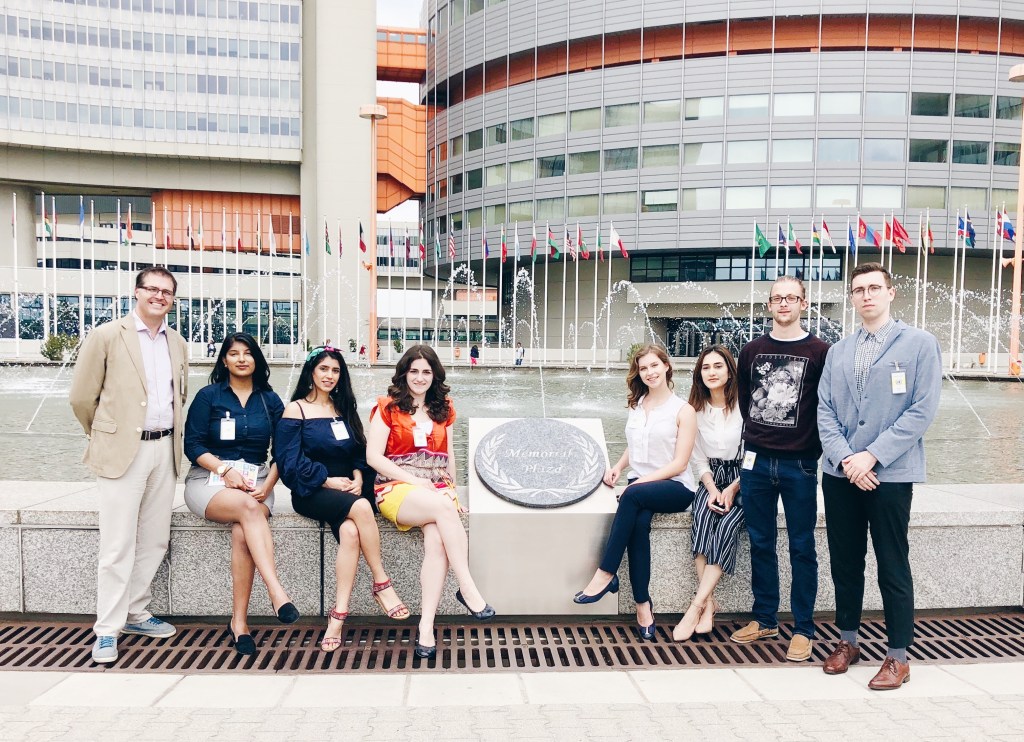
Approaching three weeks both in the classroom and in field studies throughout Central Europe, there sticks out a central theme of the lectures and field trips thus far; this being organizations and the ways in which they use strategy to succeed.

With particular note, this week’s shift has been more so on non-governmental organizations such as the United Nations (UN) or their subsidiary the United Nations Industrial Development Organization (UNIDO) and the Organization of Petroleum Exporting Countries (OPEC), rather than last week’s private sector profit-driven organizations Bata Shoe Factory and Red Hat Inc. This is particularly noteworthy because it provides an excellent point of comparison between a profit-driven versus a non-profit driven approach to organizational structure, company goals and marketing strategy.
The UN, which is founded on the base principals of global impact, boasts the key drivers of results-based management, knowledge management, and risk management. Results-Based management provides the closest outlook towards a goal that is monetary. As such, when reading this section on the UNIDO website, there is no specific information provided with regards to budgeting, nor a financial or economic plan. Instead, it states, “The PPM module systematically ensures the definition of outcomes and outputs for each project including indicators on how these are being achieved.”
Like many organizations, which promote transparency with their shareholders, there is a fine line of diplomacy involved in what information they choose to share. At the UNIDO presentation on Thursday, the speaker offered more factual information about the organization, going on to provide examples such as Hiba from Bahrain who was provided with the sum of money to kick start what would end up to be an immensely successful business. This contributed to Bahrain’s economy and enforced the empowerment of women in the technology and entrepreneurial spheres. As impressive as this is, there was no little to no challenges, obstacles or difficulties highlighted at an organizational standpoint. Rather, there was a subtle undertone of the glamorous Eurocentric we-save-the-world rhetoric that the organization provided, which is all too common with not for profit organizations.
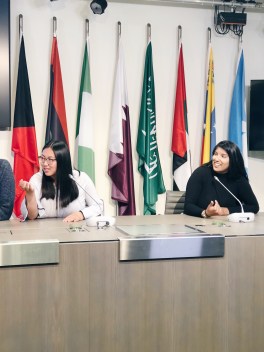
The same diplomatic transparency was found (to a lesser extent) with the presentation by the Organization for Petroleum Exporting Countries (OPEC)’s Hind Zaher who was representing the Public Relations and Information department. She kept an engaging pace and tone while providing very important and useful information about OPEC’s history, objectives and challenges along the way. When it came to the question and answer segment of the presentation, tough questions about oil prices and market competition were posted. As much as Zaher was frank during the presentation, it is important to note that OPEC has been portrayed in the media as the so-called bad guy.
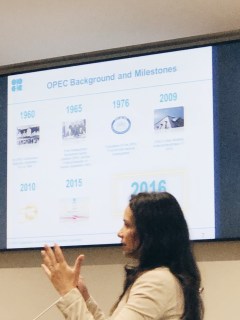
They have the power to regulate market prices for oil, and as such, they have received tremendous backlash for the high oil prices today. These oil prices safeguard our economic and political wellbeing, as it determines the value of our dollar, our purchasing power and therefore our quality of life. This is a heavy burden to bear for the secretariat general and all other policymakers and member states contributing to the discussion. According to Forbes, Trump says that OPEC is keeping oil prices “artificially high.” This was acknowledged during the presentation but to a brief extent. Albeit mentioning that there were a target and range in which the market price must fall, Zaher continued to push the idea that OPEC has nothing to do with setting the price of oil. They were simply to be seen as the mediator or middleman. Like any good scholar should, critiquing information that is provided to you at face value is key to thorough understanding. As was discussed in the lecture, diversity is important for the sole reason that it accounts for all markets and persons affected. There is the fable of the Blind Man and the Elephant, which speaks to the need for interdisciplinary understanding in order to see the bigger picture altogether, rather than a small limited view of the whole. Likewise, of OPEC’s 14 member states, the majority are Arab countries, the second majority being Latin America and African, and none being European. What this means for the market is that there is an alternate agenda behind the scenes that we must consider. The interests of Arab countries are much different than those of North American and European countries, where they may push to further their own already thriving economies.
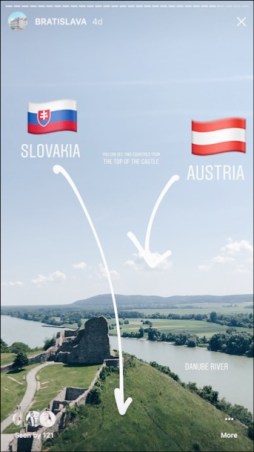
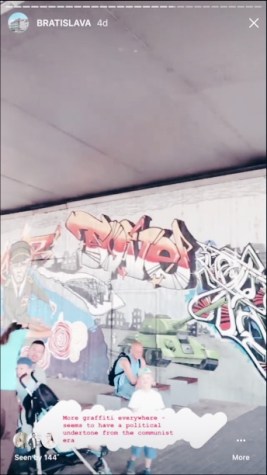
What is also particularly noteworthy was the not-for-profit organizations, specifically churches and castles, in Bratislava, Slovakia, where a few classmates and I made an impromptu trip by boat from Vienna, Austria. As is highlighted in the pictures and explained in Libor’s lecture, Slovakia’s political tension and history still have an immense impact on the country’s economic wellbeing. Ridden throughout the city is graffiti highlighting the city’s current and past communist ideals that left Slovaks with very little financial independence, spiritual or religious belief, and very little motivation to work for wages, which did not reflect the quality or value of their work. Interestingly enough, the people of Slovakia were exceptionally kind and caring, perhaps this is attributed to their humble beginnings. A shop keeper gave me my postcards for free, another waitress taking the time to recommend food for the entire table, and also saving our forgotten items for us upon our return to the restaurant the next morning, In the churches and castles, this diplomatic transparency for funding and donations is also not a new concept, where misuse of funds is the cause for political and economic instability.
When speaking to a Slovak, I learned of the misuse of funds amongst political parties during the current political climate of Slovakia, where the conservatives and liberals are still at loggers head. Be it in the profit or not-for-profit world, 100% transparency is not always guaranteed so to protect an organization’s true agenda, be it malicious or not. Diplomacy tends to take precedence over transparency, and this usually comes at the cost of uninformed and unpowered civilians who do not have the means to make the difference. We must always look at organizations from a critical lens to ensure that they are honouring their word and working in our best interest.
 Lubna Alli
Leave a comment