
Who are the Moors & Why Are They Relevant?
The term “Moors” refers primarily to the Muslim inhabitants of the Maghreb, the Iberian Peninsula, Sicily, Sardinia, Corsica, and Malta during the Middle Ages. Moors are not distinct or self-defined people, and early modern Europeans variously applied the name
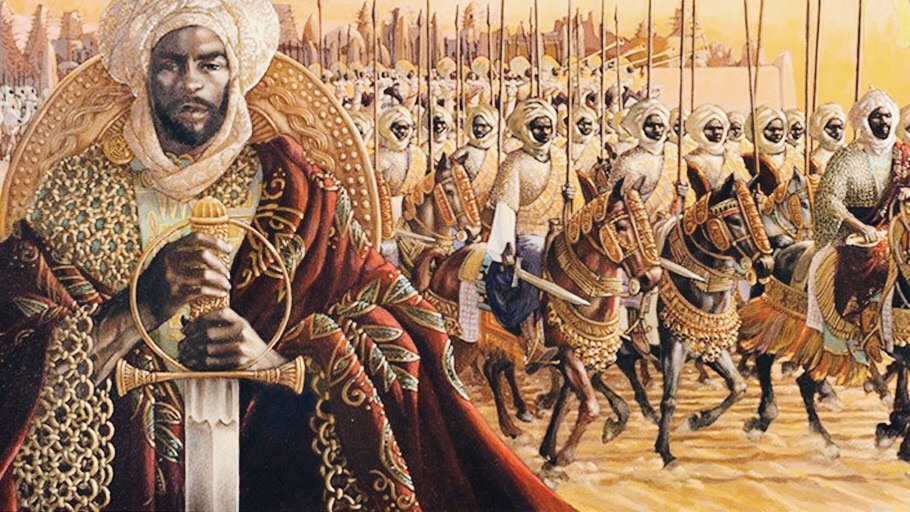

to Arabs, North African Berbers, and Muslim Europeans. The Muslims ruled in Spain for centuries upon centuries, specifically from 711 to 1492. It was the Romans first, then the Muslims, and now the Christians.
At their height, the Moorish territories in Spain were the most modern cities in Europe. The streets were well-paved, with raised sidewalks for pedestrians. During the night, ten miles of streets were well illuminated by lamps. (This was hundreds of years before there was a paved street in Paris or a street lamp in London.) They were also known for their introduction of new scientific techniques to Europe, such as the astrolabe, a device used for measuring the position of the stars and planets.
Education was also universal in Moorish Spain and available to all. Contrastingly, in Christian Europe ninety-nine percent of the population were illiterate, and even kings could neither read nor write. At that time, Europe had only two universities, and the Moors had seventeen universities located in Almeria, Cordova, Granada, Juen, Malaga, Seville, and Toledo.
Perhaps most relevant to today’s discussion, the Moors introduced many new crops including the orange, lemon, peach, apricot, fig, sugar cane, dates, ginger and pomegranate as well as saffron, sugar cane, cotton, silk and rice which remain some of Spain’s main products today!
To learn more, here is a quick YouTube video: Hidden Colors – The Moors
What is Gastronomy?

Gastronomy talks not just about food but about being a food connoisseur. It is the study of the relationship between food and culture. It is the art of preparing and serving rich or delicate and appetizing food. It is the cooking styles of particular regions. And, last and, arguably the most important, it is the science of good eating.
Spanish Words Of Arabic Origin
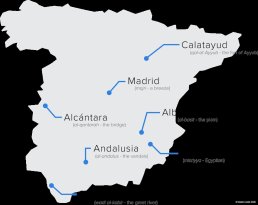
In 711 C.E., Arab armies began the conquest of the Iberian Peninsula. With the conquest, the Moors brought with them their Arabic architecture, art, and of course, language. Over time, Arabic expressions mixed with old Spanish vocabulary to become the Spanish dialect that most Spanish-speaking countries use today.
Even after King Ferdinand II and Queen Isabel I expelled the Arab empire from the Spanish kingdom in 1492, Castilian Spanish has retained approximately 8,000 words with Arabic origin to this day. After Latin, Arabic has made the greatest contribution to the Spanish language. Some examples of these words that are relevant to food and eating are found below.
- Aceite (oil)
- Aceituna (olive)
- Albaricoque (apricot)
- Azafrán (saffron)
- Arroz (rice)
- Albóndiga (meatballs)
- Almendra (almond)
Planting & Growing
Through the use of their advanced technology for the time, Moors planned the planting of olive and almond trees to ensure they delivered healthy fruit. They planned efficient irrigation systems in cities such as Granada and Córdoba. They also first planted crops of sugar, mint, spinach and aubergines.
Method of Cooking
The Moors cooked in clay pots and wood burning ovens. Moorish kebabs, known as pinchos morunos, are one of the most popular dishes served in any Spanish bar or restaurant. The churrasco, which is a Spanish and Portuguese term referring to beef or grilled meat more generally also hails from the Moors. Frying with olive oil and preserving in vinegar (escabeche) were both Arabic practices. Olive oil specifically is a very important part of the Moorish and Spanish diet as there are many varieties of olive oil which are perfect for frying. The reason is, they get hot very quickly but won’t burn. Also, frying with olive oil can be healthy too! In fact, a recent study even said that frying vegetables in extra virgin olive oil is healthier than boiling them.


Cookware & Pots and Pans
The mortar and pestle is key to any Spanish kitchen. It was used by the Moors to grind spices and nuts into smooth creams that helped make soups such as ajo blanco (white garlic soup) and, years later, gazpacho after the discovery of tomatoes in the New World.
Spices
The Moors were perhaps most Cumin (comino) is widely used with vegetables and tomatoes. Coriander (cilantro) is used to flavour barbecued skewered meat. Cinnamon (canela), nutmeg (nuez moscada) and aniseed (matalhuva) play a big part in modern-day Spanish cooking. Saffron (azafrán) is an important Moorish spice that is used so often in Spanish cooking. In paella, fish and shellfish stews, there is no substitute for Saffron.
Sweet & Savory Foods
- Almond pastries
- Fritters in honey
- Milk-based puddings
- Quince paste
- Peaches in syrup
- Iced sorbets
- Raisins and pine nuts used together in sauces
TAPAS
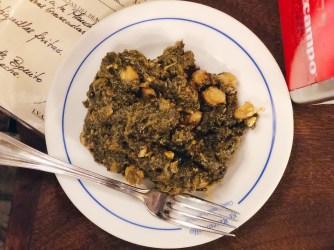
Differences over the Years – Islamic Rule Then Versus Catholic Spain Today
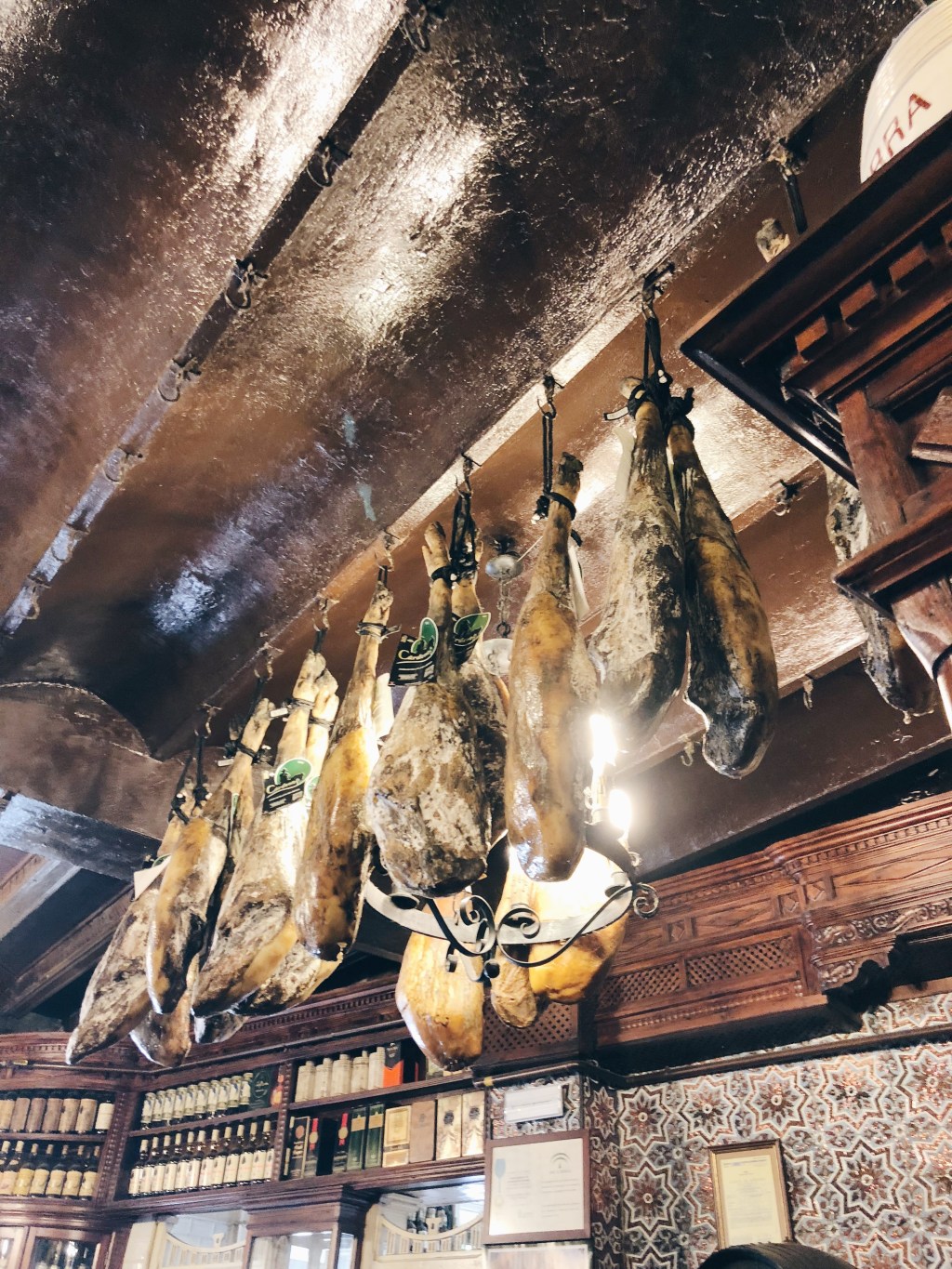
As you probably already know, Muslims do not drink alcohol or eat pork, which are two of the main differences in the Moorish influence on Spanish gastronomy today. Instead of drinking alcohol, the Moors developed the modern Alembic ((Alambique in Spanish) or “still.” Non-Muslims soon discovered the power of distilling grapes (leftover seed, stems, and skins of grapes pressed for wine production) and created neutral flavoured brandy. Pork and pig products were also not used and were re-introduced after the reconquest.
 Lubna Alli
Leave a comment