

After seeing my classmate well up in tears during this lecture’s discussion, I am now conflicted. I always thought of myself as marginalized and, as a result, underprivileged. I am a young, immigrant, Muslim, woman of colour, who comes from a low socio-economic background. That has always been the way I classify myself. From a very cold, regimented classification system determined by the government.
In other ways, I see myself as fairly privileged and well off. I live comfortably under my parents’ roof for free, I didn’t have to buy myself my car, or pay for my insurance or phone bill, for that matter. I eat for free, I am able to save whatever money I earn for my personal uses, and I was able to travel and study abroad, a luxury that many can’t afford. I have parents that are both educated at the university level, my mother tongue is English, and I am also bilingual in both national languages. Both of my parents are still married, another form of implicit privilege I often overlook.

Everything is relative. Depending on who I compare myself to, I am inclined to feel one way or the other about my privilege. The difference in how I feel about myself when I compare myself to my summer abroad friends compared to my childhood Scarborough friends is stark.
I recently had the opportunity to live, study, and travel in Siena, Italy; Brno, Czech Republic; and, Seville, Spain through the University of Toronto Summer Abroad program. Aside from coming to Canada from Guyana, this was my first time flying on a plane. Road trips all over Canada and New York were my only other respite prior.
During my undergraduate years, I tirelessly worked two jobs while simultaneously maintaining a full-time course load (and trying to stay sane) so that I could afford this chance to finally see the world from a different lens. This is the first school year where I’m not working insane hours, and as such, it is the first time in my undergrad where I actually feel as though I am able to focus on my career completely and succeed in my academic endeavours.
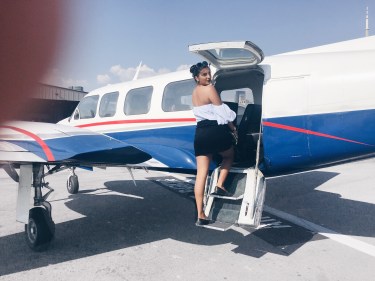 Without little to any financial support from my family or my school, I paid the hefty price tag of $30,000 and made my way across the world. I was ecstatic to finally be living the thing I had dreamt about for so long. It was long before I arrived and interacted with many of my summer abroad friends that I realized my story was much different from theirs. In many ways, I was not like them. They did not understand money, struggle, and hard work the way I did. They did not have to foot the bill for their summer abroad studies the way I did. While I had to work, they were able to spend their time doing extracurricular activities such as hockey, swim or piano, something I always wished I had the time and funds to do.
In conversation with one of these lot of summer abroad friends, I disclosed that I had my first job at the age of 14 and that I was putting myself through school without the help of my parents. It was to my shock that I was mockingly called a “Scarborough Success Story” by one of my more well-to-do colleagues. I remember being so embarrassed that I could not find the words to defend myself. What was there even to defend? He was right. I was a Scarborough success story; I did live in one of Toronto’s Neighbourhood Improvement Areas, and I did make it out of the hood to be able to see Europe for the first time.

In some ways, now that I’m older I wouldn’t trade this lack of privilege for the world. When I was younger I always wished I was born rich and white. This has now changed, for the most part. I am okay with who I am and what I have experienced to bring me to where I am today. Doubt only resurfaces in more implicit ways of my life, usually with the guys I date or with the friends I have, both of whom usually end up being white. I guess it doesn’t make it easier, self-esteem wise, because I know I’m doomed to feeling like I’ll never quite be good enough. My coloured and friends and I have this discourse all of the time, often attributing our implicit attraction for white guys to our subconscious association with a want for second-hand white privilege, almost as if we’ll gain it by process of osmosis if we date them. This is a whole topic in itself because I feel that it is something that non-white guys also deal with. They also seem to want white girls for the same reason. If this is the case, then how is any guy supposed to love me? To love me is to love the colour of my skin, but to love the colour of my skin is to stop loving her.
 Lubna Alli
Leave a comment