
What about the stakes for you – do you identify personally as someone affected by a conflict over land? I don’t mean as an ally or a settler, but as someone who has been displaced, or whose occupation of land has been challenged. What meaning or purpose did that land hold for you: housing, recreation, subsistence, employment, community, etc.? Through what mechanism was your land access challenged? Have you “dream[t of] alternative realities”?
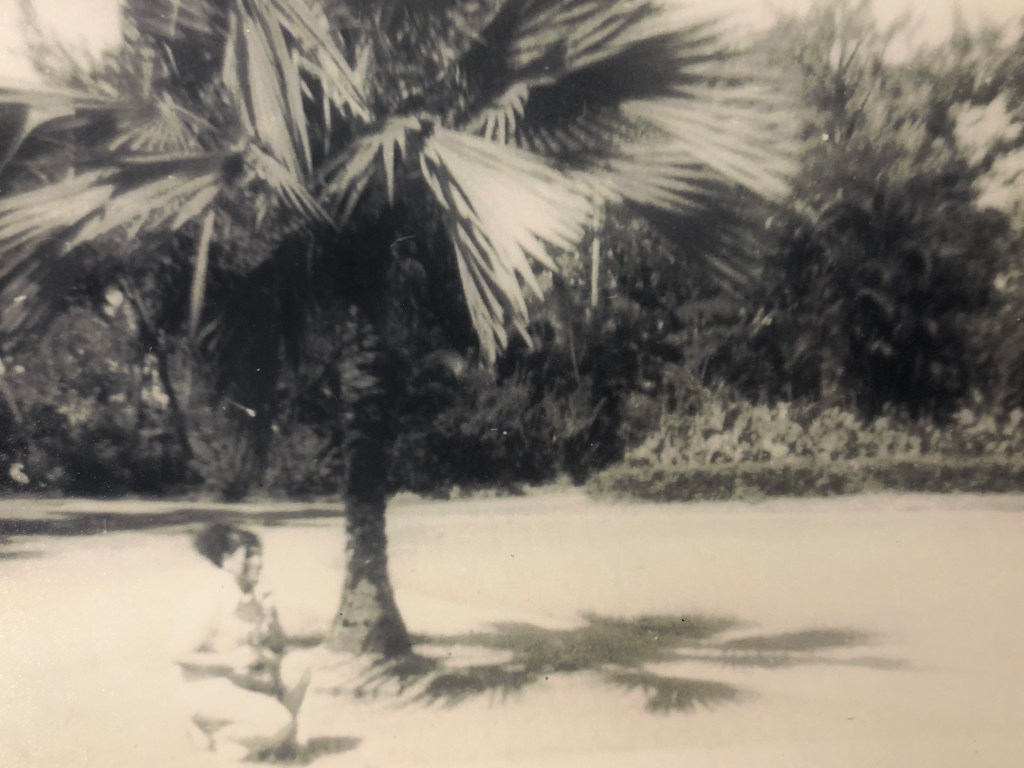
This question is tricky because my first instinct would be yes, but ultimately I do not think I have been traumatized enough by displacement or been challenged occupation wise by the land to consider myself someone that is personally affected by it. I come from Guyana, where I have always felt some sort of innate connection to the land despite having settled here in Toronto at the age of 7. At the time when I lived there, the land served many purposes for me, primarily housing but also recreation. It is a place I have memories of running in the pasture, climbing mango trees, watching the stars from the veranda, playing cricket in the front yard, and hanging from the tire swing in the backyard. In previous generations, this same place served as subsistence and community as well. The backyard was home to a chicken farm which brought income for my grandparents while the sense of community was always in the bottom house, which is the open space beneath many of the houses in the village that were built upon high pillars. There we hosted many gatherings, formal and informal–dancing, eating, and singing.
My access to this land was not necessarily personally challenged, but indirectly through politics, it has been. The village I come from in Guyana is called Enmore on the East Coast of the Demerara River. It is a predominantly Indo-Guyanese settlement that has faced tensions with other predominantly Afro-Guyanese villages that you must pass through to go into Georgetown, the capital, or simply town, as we call it. Through these tensions, which came as a bigger nationwide conflict with the two major governmental parties, there has been a trickle-down effect that has led to other issues such as police bribing, violence, and protest. My access to my land was challenged in this way as it became unsafe for my family and I to stay there, so our only resort was to flee. I have dreamt of alternative realities, many of which centre around escapism. Oftentimes this narrative plays out as fleeing Toronto to somewhere else in the world outside of North America, oddly enough not back home to Guyana where I know it is still not safe, and where I have lost a fair connection to the land. It wasn’t until I found a reason to be reconnected to my Caribbean roots that I started to feel this missingness for something that I felt was cut short.
I’ve made a lot of friends that are international students from Bermuda, having even gone there to visit them, and being surrounded in an environment that so naturally reminded me of home has made me empty in some ways. It makes me wish that I was able to return to the land and escape to an alternative reality to Guyana when it is too cold in Canada, but this is not a feasible reality for me like it is for Bermudians where it is safe. Perhaps I am creating another alternative reality of my own in other ways that I am not fully aware of yet.
Responding to Q5: I think you could consider the loss of an intimate sense of place and community as a kind of land conflict. The political tensions in Guyana are a legacy of how colonialism played out there. What are the reasons that people are pushed from their homes in search of distant shores, pulled especially to the global north?
 Lubna Alli
Leave a comment