
Reading: Barns, S. (2018). Smart cities and urban data platforms: Designing interfaces for smart governance.
The city as a smart home
The term “smart city” is becoming a buzzword that is thrown around these days, and it seems like everybody wants the inside scoop. It is not just about the benefits that it provides on the ground for citizens and the people of the masses; it continues to be suggested as an organizational tool to run the places we call home more smoothly. Think about it as your family’s smart home system, but on a much grander, city-wide scale.
On-demand transport, intelligent water management, responsive lighting, and distributed energy resources are rapidly replacing the legacy infrastructure and service delivery models that have served the cities of the twentieth century. All of these are benefits that Barns brings up in her research, which pushes for the implementation of urban data platform interfaces. What this fancy language posits is her belief in the power of organizing the city through a central data interface that can manage all the different facets of city governance. Again, much like how your Nest smart home products all link up and are controllable from one central device, but at a much larger city-wide scale (CityScore, a citywide performance dashboard used in Boston, being a pre-existing example).

Keeping pace through public-private partnership
She concludes by emphasizing the need for public-private partnerships between governments and tech firms to make this transition seamless, pointing most specifically to urban policy and practice as a major challenge for city dashboards in a world of data-driven services and smart cities. Essentially, we (practitioners working in the city-building space) need to keep up with the pace at which technology is moving, because it will not wait for us, and it will only cause more trouble playing catch-up in the long run.
Who gets left out of the platform city?
This notion of the shift from the platform economy to the city as a platform is one that may pose implications around equity, mass capitalism, and an overall emphasis on numbers, which often places empathy and stories on the back burner in favour of empirical evidence. Who has access to the city? What about digital justice? What about communities still under boil-water advisories, many of them First Nations, which need clean, safe drinking water before they can think about affording the luxury of internet access?
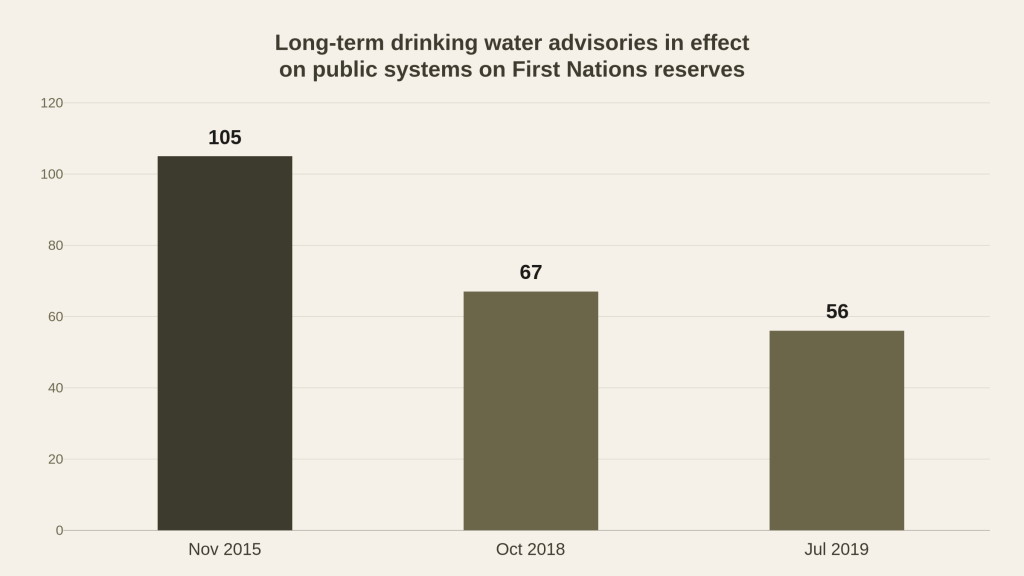
Progress is real, but slow: as of July 2019, 56 long-term drinking water advisories were still in effect on public systems on reserves, down from 105 in November 2015 (Indigenous Services Canada). A city dashboard does not see any of this. It sees the people and places that are already connected.
Who has access to the city? What about digital justice?
This may seem like a perfect plan in the perfect world to those whose worlds are exactly so, relative to others. A platform built on data rewards those who generate the most of it: the connected, the well-served and the already visible. Without deliberate design, it reinforces the advantages people already have. Poverty is systemic, so by this logic, how can city dashboards be reframed to avoid the mishaps of such computer-based error?
Key takeaways
- Barns argues for urban data platforms that manage a city through one central interface, much like a smart home.
- Her model depends on public-private partnership and on practitioners keeping pace with technology.
- A platform city has to start with who is left out, or its dashboards will reproduce the inequities already built into the city.
References
- Barns, S. (2018). Smart cities and urban data platforms: Designing interfaces for smart governance. City, Culture and Society, 12, 5–12.
- Indigenous Services Canada. (2019, August). Monthly progress update through July 2019 on long-term drinking water advisories on public systems on reserves.
- Water Canada. (2018, November). Indigenous Services Canada’s October update on long-term DWAs.


Leave a Reply