
Essay · December 2024
Snapchat’s Augmented Reality tools — Lens Studio and Spectacles — represent a category of innovation that deserves far more scrutiny than it receives. These tools are marketed as instruments of creativity and self-expression. Their business function is also something more: the systematic extraction of biometric, behavioural, and location-based data in service of Snap Inc.’s advertising business.
This essay argues that Snapchat’s AR tools are not neutral innovations. They are instruments of surveillance capitalism — a term Shoshana Zuboff uses to describe the exploitation of human experience as raw material for data extraction, behavioural prediction, and commercial profit. Drawing on Zuboff’s framework, I examine how AR technologies deepen asymmetries of power, erode individual autonomy, commodify identity, and prioritize profit over ethics.

The Technology and Its Ethical Stakes
Lens Studio is a creator platform where developers design AR filters that interact with users’ facial features, movements, and behaviours. Spectacles are AR-enabled smart glasses that capture video and audio while integrating digital overlays into physical environments. Both require continuous access to biometric and geolocation data to function.




Snapchat markets these tools as promoting creativity and real-time engagement. Critics argue they also extract significant quantities of user data — biometric facial scans, emotional responses to AR filters, usage frequency, geospatial movements — and feed that data into predictive algorithms that drive targeted advertising. Users’ experiences fuel the system. The experience of creativity is the product being sold.
Users’ experiences fuel the system. The experience of creativity is the product being sold.
Three ethical questions follow. How does Snapchat’s AR technology operationalize surveillance capitalism? Is user consent meaningful when data extraction is obscured by design? And are Snap Inc.’s mitigation efforts substantive, or performative?
Behavioural Surplus and the AR Lens
Zuboff’s central concept — behavioural surplus — is key here. AR lenses rely on reading a user’s face to function. Critics argue that this data can be stored, analyzed, and repurposed to generate predictive insights that go well beyond the filter itself. Snap says the limited data used to power Lenses stays on the user’s device and cannot identify a specific person — yet in 2022 it agreed to pay $35 million to settle an Illinois class action alleging that Lenses violated the state’s Biometric Information Privacy Act, without admitting wrongdoing. Spectacles, with their recording capabilities, capture location-based data and real-time behaviours, producing an even richer data pool. The asymmetry is the point: corporations hold exclusive control over data flows, while users remain unaware of the true scope of what’s being extracted.
The commodification goes further than behaviour. It reaches identity. Snapchat’s AR tools blend personal identity with corporate branding through sponsored lenses and filters. When a user applies a Nike or Coca-Cola filter, their face becomes an advertising canvas. Self-expression becomes a vehicle for corporate gain. And the psychological implications are real: AR filters that perpetuate unattainable beauty standards contribute to body dysmorphia and mental health struggles, particularly among young users.
The Performative Safety Response
Snap Inc. has introduced tools like Family Center and content reporting mechanisms. These address surface-level risks — harmful content, illegal imagery — but not the systemic issue. The core ethical problem is not the content users see. It is the extraction of personal data to fuel engagement-driven business models. Snap’s mitigation efforts leave that untouched.
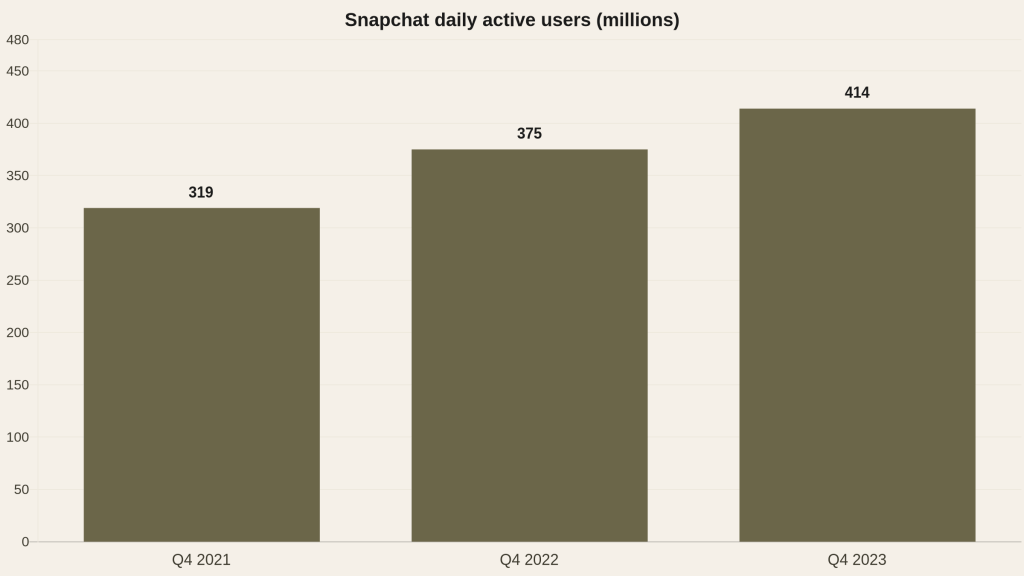
Zuboff identifies this as a hallmark of surveillance capitalism: a strategy designed to maintain public trust while ensuring exploitative practices remain unchallenged. The rapid expansion of Snapchat’s AR features — with engagement metrics as the primary design priority — reinforces this critique. Users, particularly teenagers, are drawn into immersive AR experiences with little awareness of the underlying trade-off: participation in a system that commodifies their behaviour, identity, and privacy.
What Real Solutions Require
Remedies must go beyond the performative. Four directions matter.
Transparent data ownership. Users should have clear visibility into how their AR data is collected, stored, and monetized. Consent mechanisms must require explicit, real-time user approval before any data is extracted or shared — not buried in terms of service designed to be ignored.
Independent algorithmic auditing. Third-party audits of Snapchat’s predictive systems can ensure compliance with ethical standards and prevent the misuse of biometric and behavioural data. Accountability requires external scrutiny, not just internal policy.
Ethical AR design. AR features should be designed in collaboration with psychologists and ethicists, not just engineers optimizing for engagement. Filters that promote positive self-image are possible. The choice not to prioritize them is a design decision, not a technical constraint.
Regulatory safeguards. Governments need data privacy laws specific to AR technologies — laws that establish what biometric data can and cannot be collected, stored, and used commercially. The current regulatory environment has not kept pace with the capabilities of these tools.
Conclusion
Snapchat’s AR tools are a useful case study precisely because they are presented as benign — fun, creative, generative. That framing obscures what they actually are: infrastructure for surveillance capitalism. The ethical concerns are not hypothetical. The power asymmetries are real, the data extraction is active, and the mitigation efforts are insufficient.
Real solutions require a paradigm shift: transparency, data ownership, ethical design, and regulatory oversight. Not as PR strategy. As structural requirement.
Key takeaways
- Snapchat’s AR tools are marketed as creative self-expression, but they also serve a data-driven advertising business — what Zuboff calls surveillance capitalism.
- Sponsored lenses turn users’ faces into advertising canvases, commodifying identity as well as behaviour.
- Content-safety features don’t touch the core issue; real fixes need transparent data ownership, independent audits, ethical AR design, and AR-specific regulation.
References
- Malik, A. (2022, August 24). Snap agrees to $35 million settlement in Illinois privacy lawsuit. TechCrunch.
- Snap Inc. (2023, January 31). Snap Inc. announces fourth quarter and full year 2022 financial results.
- Snap Inc. (2024, February 6). Snap Inc. announces fourth quarter and full year 2023 financial results.
- Zuboff, S. (2019). The Age of Surveillance Capitalism: The Fight for a Human Future at the New Frontier of Power. PublicAffairs.


Leave a Reply